
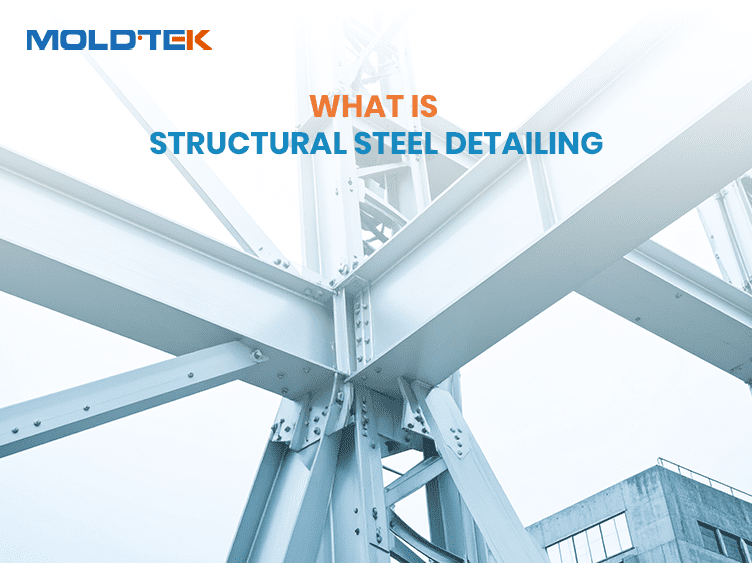
What is Structural Steel Detailing?
Structural steel detailing is the specialized process of creating detailed drawings and 3D models that act as the blueprint for fabricating and assembling structural steel components, such as beams, columns, braces, trusses, joists, anchor bolts, and connection nodes.
These technical outputs include:
- Fabrication drawings (a.k.a. shop drawings)
- Erection drawings for site assembly
- Bolt and weld maps with tolerances
- BIM models with embedded metadata
- Cutting/drilling templates for CNC machines
Why Structural Steel Detailing is Important in Construction
Structural steel detailing plays a critical role in translating structural engineering designs into fabrication-ready documentation. While engineers define load paths, dimensions, and design intent, detailers convert those plans into precise, measurable outputs that fabricators and site teams can execute.
Without accurate detailing:
- Fabrication errors may occur
- Components may not align during erection
- Site modifications can increase costs
- Project timelines may be delayed
Detailing acts as the bridge between structural design and on-site construction.
Key Aspects of Structural Steel Detailing
1. Shop Drawings
Shop drawings provide exact dimensions, material specifications, hole placements, weld symbols, and bolt information required to fabricate individual steel members.
2. Erection Drawings
These drawings guide site teams in assembling structural components, identifying member positions, connection references, and sequencing requirements.
3. BIM Modeling
Modern detailing relies heavily on Building Information Modeling (BIM) software such as Tekla Structures, SDS/2, AutoCAD, and Revit. These tools enable 3D visualization, automated connection design, and clash detection before fabrication begins.
4. Connection Detailing
Connections bolted, welded, or hybrid are carefully documented to ensure structural integrity and compliance with engineering standards.
5. CNC and Fabrication Data
Detailed outputs often include CNC-ready files that guide automated cutting, drilling, and plate processing machines in fabrication facilities.
Structural Steel Detailing Workflow
Although workflows vary depending on project size and complexity, a typical detailing process includes:
- Review of Design Drawings
Examination of structural drawings and specifications to understand design intent. - RFI and Coordination
Clarification of ambiguities with engineers or project stakeholders. - 3D Modeling
Creation of a complete steel model reflecting geometry, connections, and member placement. - Generation of Shop Drawings
Preparation of fabrication-ready drawings for individual components. - Erection Planning Documentation
Development of general arrangement (GA) drawings and site assembly references. - Quality Checks and Revisions
Peer review and coordination updates before final submission.
Structural Steel Detailing vs Structural Design
Structural design and structural steel detailing serve different functions within a project lifecycle.
- Structural design determines load calculations, material sizing, and engineering compliance.
- Structural steel detailing translates those designs into precise fabrication and erection documentation.
While structural engineers define how a building should perform, detailers define how it will be built at the fabrication and installation level.
Organizations seeking implementation support may refer to dedicated structural steel detailing services for project-specific execution requirements.
Where Structural Steel Detailing is Used
Structural steel detailing is applied across various infrastructure and construction sectors, including:
- Commercial buildings
- Industrial facilities
- Warehouses
- Bridges
- Stadiums
- Manufacturing plants
In each case, detailing ensures that fabricated components align precisely with engineering requirements.
Why Accuracy Matters in Structural Steel Detailing
Accuracy in detailing directly impacts:
- Structural safety
- Fabrication efficiency
- Material optimization
- On-site coordination
- Compliance with standards such as AISC, BS, IS, Eurocodes, and OSHA
Even minor dimensional discrepancies can lead to misalignment during assembly. That is why detailing emphasizes tolerance control, clash detection, and drawing validation before fabrication begins.
Common Software Used in Structural Steel Detailing
Industry-standard tools commonly used include:
- Tekla Structures
- SDS/2
- AutoCAD
- Revit
- Navisworks
These platforms allow for integrated 3D modeling, connection design, automated drawing extraction, and interdisciplinary coordination.
Conclusion
Structural steel detailing is a precision-driven engineering process that transforms structural design concepts into fabrication-ready documentation. By combining technical drawings, 3D modeling, and coordinated connection detailing, it ensures that steel components are manufactured and assembled accurately, safely, and efficiently.
As construction projects continue to demand higher speed and accuracy, the role of structural steel detailing remains fundamental in bridging engineering design and real-world execution.

About the Author
By Abhishek Suresh
Deputy Manager – Marketing at Moldtek Technologies
A distinction holder in MSc International Management from Trinity College Dublin and a semi-qualified Chartered Accountant (CA – IPCC from India) with an undergraduate degree in the field of accountancy and finance. I am currently working at Moldtek Technologies Ltd as a Deputy Manager, Marketing, taking care of the entire marketing activities of the business.