
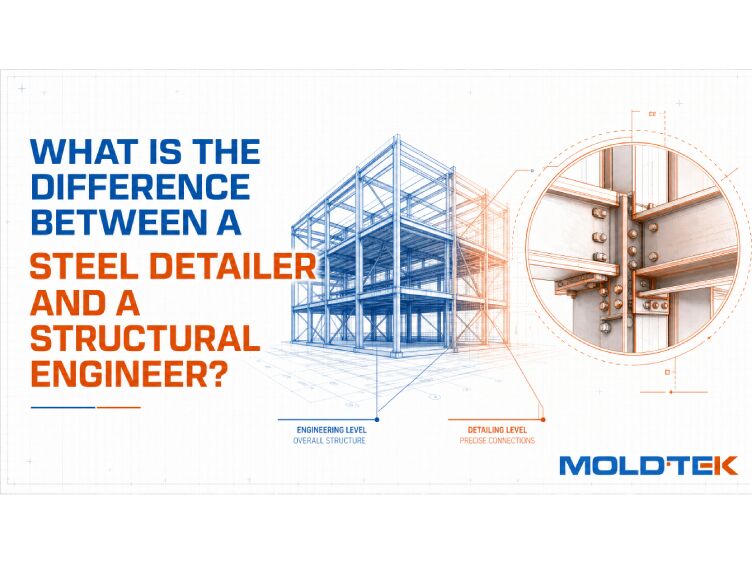
Steel construction projects rely on multiple professionals working together to transform engineering concepts into safe, buildable structures. Among the most important roles in this process are structural engineers and steel detailers.
Although these professions work closely together and often contribute to the same project, their responsibilities, deliverables, and areas of expertise are significantly different. Understanding the distinction between a steel detailer and a structural engineer helps clarify how steel structures move from design to fabrication and ultimately to construction.
Understanding the Relationship Between Structural Engineers and Steel Detailers
Structural engineers and steel detailers play complementary roles within a construction project.
A structural engineer focuses on determining how a structure will safely support loads and remain stable throughout its lifespan. A steel detailer takes the engineer’s design information and converts it into precise drawings and models that can be used for fabrication and erection.
In simple terms:
- Structural engineers determine what needs to be built
- Steel detailers determine how it will be fabricated and assembled
Both roles are essential to successful project delivery.
What Does a Structural Engineer Do?
A structural engineer is responsible for designing structural systems that can safely withstand environmental and operational loads.
Their primary focus is on:
- Structural integrity
- Safety
- Stability
- Building code compliance
- Load calculations
Structural engineers analyze factors such as:
- Dead loads
- Live loads
- Wind loads
- Seismic forces
- Material properties
Based on these calculations, they determine:
- Beam sizes
- Column dimensions
- Structural framing layouts
- Foundation requirements
- Load-bearing capacities
The engineer’s role is to ensure that the structure performs safely under expected conditions and complies with applicable design standards.
Key Deliverables of a Structural Engineer
Structural engineers typically produce:
- Structural design drawings
- Design calculations
- Structural analysis reports
- Framing plans
- Foundation layouts
- Engineering specifications
These documents define the overall structural framework and design intent of the project.
However, they do not usually provide the detailed fabrication information required by steel workshops.
What Does a Steel Detailer Do?
A steel detailer takes engineering drawings and converts them into fabrication-ready documentation.
The primary focus of a steel detailer is:
- Constructability
- Fabrication accuracy
- Installation efficiency
- Coordination between project teams
Steel detailers develop highly detailed documentation that enables fabricators and erection crews to manufacture and install structural steel accurately through effective structural steel detailing workflows.
They work with:
- Structural drawings
- Architectural drawings
- Mechanical layouts
- Project specifications
Their role ensures that every steel component can be fabricated and assembled according to the engineer’s design intent.
Key Deliverables of a Steel Detailer
Steel detailers typically prepare:
- Shop drawings
- Erection drawings
- Connection details
- Anchor bolt layouts
- Material take-offs
- Bill of Materials (BOM)
- 3D BIM models
Understanding the role of a structural steel detailer can provide further insight into how these deliverables support fabrication and construction activities.
Unlike structural design drawings, detailing documents contain fabrication-level accuracy and installation instructions.
Structural Engineer vs Steel Detailer: A Comparison
| Aspect | Structural Engineer | Steel Detailer |
| Primary Focus | Structural safety and design | Fabrication and constructability |
| Main Responsibility | Structural analysis and load calculations | Detailed fabrication and erection documentation |
| Key Objective | Ensure structural integrity | Ensure fabrication accuracy |
| Project Stage | Design phase | Fabrication and construction phase |
| Output | Structural design drawings | Shop drawings and erection drawings |
| Software Commonly Used | STAAD.Pro, ETABS | Tekla Structures, AutoCAD |
| Focus Area | Macro-level structural performance | Micro-level fabrication details |
Although their responsibilities differ, both professionals contribute to the same project goals.
How Steel Detailers Support Construction Projects
Steel detailing bridges the gap between design and construction.
For example, a structural engineer may specify the size and location of a beam. A steel detailer then defines:
- Exact cut lengths
- Bolt hole locations
- Weld specifications
- Connection details
- Installation sequences
Many organizations operating as a steel detailing company depend on this level of documentation to support fabrication accuracy and project coordination.
The Role of BIM and Digital Coordination
Modern steel detailing increasingly relies on Building Information Modeling (BIM) and advanced detailing software.
Tools such as Tekla Structures allow steel detailers to:
- Create detailed 3D models
- Detect clashes between building systems
- Coordinate with architects and engineers
- Improve fabrication accuracy
These digital workflows help reduce errors before fabrication begins and improve project coordination.
Structural engineers also benefit from BIM-based collaboration by reviewing constructability and coordination issues earlier in the project lifecycle.
Why the Difference Matters
The distinction between structural engineers and steel detailers is important because each role requires specialized knowledge.
Structural engineers focus on:
- Engineering principles
- Structural behavior
- Code compliance
- Load analysis
Steel detailers focus on:
- Fabrication processes
- Welding standards
- Connection detailing
- Construction sequencing
By separating these responsibilities, projects benefit from both safe structural design and efficient fabrication workflows.
This division of expertise helps reduce errors, improve coordination, and accelerate project execution.
How Structural Engineers and Steel Detailers Work Together
Successful steel construction projects depend on close collaboration between structural engineers and steel detailers.
The process typically follows these steps:
- Structural engineers create the design.
- Steel detailers develop fabrication and erection documentation.
- Engineers review detailing outputs for compliance.
- Fabricators manufacture steel components.
- Construction teams install the steel on-site.
This coordinated workflow helps ensure that design intent is accurately translated into a completed structure.
Summary: What Is the Difference Between a Steel Detailer and a Structural Engineer?
A structural engineer is responsible for designing safe and stable structures by performing load calculations, selecting structural members, and ensuring code compliance. A steel detailer converts those engineering designs into detailed fabrication and erection drawings used by fabricators and construction teams. While structural engineers focus on structural performance and safety, steel detailers focus on constructability, fabrication accuracy, and installation efficiency.
Conclusion
Structural engineers and steel detailers serve distinct but interconnected roles within steel construction projects. Engineers define how a structure should perform, while detailers define how it should be fabricated and assembled. Together, they create a seamless workflow that transforms engineering concepts into safe, buildable structures. Understanding the differences between these professions highlights the importance of both design expertise and detailing precision in successful construction projects.
A structural engineer is responsible for designing safe and stable structures by performing load calculations, selecting structural members, and ensuring compliance with building codes and engineering standards. A steel detailer takes those engineering designs and develops detailed fabrication and erection drawings that guide steel manufacturing and on-site assembly. While structural engineers focus on structural performance and safety, steel detailers focus on constructability, fabrication accuracy, and installation efficiency. Together, they play complementary roles in ensuring that steel structures are both structurally sound and accurately built.

About the Author
By Abhishek Suresh
Deputy Manager – Marketing at Moldtek Technologies
A distinction holder in MSc International Management from Trinity College Dublin and a semi-qualified Chartered Accountant (CA – IPCC from India) with an undergraduate degree in the field of accountancy and finance. I am currently working at Moldtek Technologies Ltd as a Deputy Manager, Marketing, taking care of the entire marketing activities of the business.