
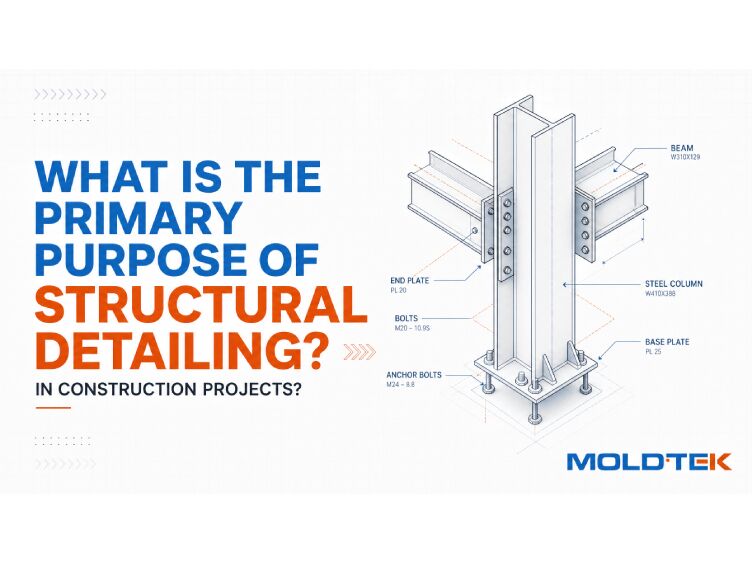
Structural detailing is one of the most important steps in the construction process because it transforms engineering concepts into practical instructions that can be used for fabrication and construction. While structural engineers develop the design and determine how a structure should perform, structural detailing provides the precise information required to manufacture and assemble structural components accurately.
The primary purpose of structural steel detailing is to bridge the gap between design intent and physical construction, ensuring that steel structures can be accurately fabricated and assembled according to project requirements. Through detailed drawings, 3D models, and fabrication documentation, structural detailing helps ensure that every structural component is produced, installed, and coordinated according to project requirements.
Without accurate detailing, construction projects may experience fabrication errors, installation challenges, project delays, and increased material waste.
Understanding Structural Detailing
Structural detailing involves creating detailed documentation that guides the fabrication and erection of structural components.
Structural detailing includes:
- Shop drawings
- Erection drawings
- Connection details
- Material take-offs
- Anchor bolt layouts
- 3D BIM models
The information contained in these documents helps fabricators, contractors, and construction teams understand exactly how structural elements should be manufactured and assembled through effective structural steel detailing practices.
Bridging the Gap Between Design and Construction
One of the primary purposes of structural detailing is to convert engineering designs into buildable instructions.
Structural engineers typically provide:
- Structural calculations
- Load requirements
- Structural design specifications
- Framing layouts
However, these drawings often do not contain the fabrication-level information needed by workshops and site teams.
Structural detailing fills this gap by providing detailed documentation that translates design concepts into actionable construction information.
This allows project teams to move efficiently from design to fabrication and installation.
Ensuring Structural Integrity and Safety
Structural detailing plays a critical role in maintaining structural integrity throughout a project.
Accurate detailing ensures that:
- Structural members are fabricated correctly
- Connections meet design requirements
- Load paths are maintained
- Construction follows engineering intent
Detailed connection drawings, fabrication instructions, and erection plans help ensure that steel and concrete components perform as intended once installed.
By supporting compliance with engineering standards and building regulations, structural detailing contributes directly to construction safety and highlights the broader importance of structural detailing throughout the project lifecycle.
Improving Fabrication Accuracy
Fabrication accuracy is another major purpose of structural detailing.
Fabricators rely on detailed drawings to manufacture components according to exact specifications. Structural detailing provides the information required for efficient fabrication processes, helping improve quality and consistency during production.
These drawings provide information such as:
- Dimensions
- Hole locations
- Weld specifications
- Bolt requirements
- Material grades
Accurate detailing helps ensure that fabricated components fit together correctly during installation, reducing the need for modifications and adjustments.
This improves overall project quality and efficiency.
Reducing Errors and Material Waste
Construction errors can have a significant impact on project schedules and budgets.
Structural detailing helps reduce these risks by identifying potential issues before fabrication begins.
Detailed models and coordinated drawings allow project teams to detect:
- Dimensional conflicts
- Design inconsistencies
- Coordination issues
- Constructability concerns
Addressing these challenges early helps reduce:
- Rework
- Material waste
- Fabrication errors
- Project delays
As a result, projects can be delivered more efficiently and cost-effectively.
Supporting Efficient On-Site Assembly
Structural detailing also helps improve construction site productivity.
Erection drawings provide clear instructions regarding:
- Placement of beams and columns
- Installation sequences
- Grid references
- Elevation information
- Connection locations
These drawings help construction teams assemble structural components accurately without relying on assumptions or field modifications.
Clear documentation improves workflow efficiency and reduces installation-related delays.
Enhancing Coordination Between Project Teams
Construction projects involve collaboration between multiple disciplines, including:
- Structural engineers
- Architects
- Fabricators
- Contractors
- BIM coordinators
Structural detailing serves as an important communication tool between these stakeholders.
By providing a common set of coordinated drawings and models, detailing helps ensure that everyone works from the same project information.
This improves collaboration and reduces misunderstandings during project execution.
Supporting BIM and Digital Construction Workflows
Modern structural detailing increasingly incorporates Building Information Modeling (BIM) technologies.
BIM-based detailing allows project teams to:
- Create accurate 3D models
- Detect clashes between systems
- Improve project visualization
- Coordinate disciplines more effectively
- Streamline project planning
These capabilities help improve decision-making and reduce construction risks before work begins on-site.
Why Structural Detailers Are Important?
Structural detailers play a key role in translating engineering intent into practical construction information.
While structural engineers focus on structural performance and design calculations, detailers focus on:
- Fabrication requirements
- Constructability
- Coordination
- Installation planning
Their work helps ensure that design concepts can be successfully manufactured and assembled in the field.
This makes structural detailers an essential link between engineering design and construction execution.
Summary: What Is the Primary Purpose of Structural Detailing in Construction Projects?
The primary purpose of structural steel detailing is to transform engineering designs into precise fabrication and construction instructions. Through detailed drawings, BIM models, and coordinated documentation, detailing ensures structural integrity, fabrication accuracy, compliance with building codes, and efficient on-site assembly. Through detailed drawings, BIM models, and coordinated documentation, structural detailing helps ensure structural integrity, fabrication accuracy, regulatory compliance, and efficient on-site assembly. By bridging the gap between design and construction, detailing plays a critical role in reducing errors, improving coordination, and supporting successful project execution.
Conclusion
Structural detailing serves as the foundation connecting engineering design and real-world construction. By providing accurate fabrication drawings, erection plans, and coordinated project documentation, it helps ensure that structures are built safely, efficiently, and according to design intent. Accurate detailing can also help save time, reduce rework, and improve compliance with applicable building codes throughout the construction process. As construction projects continue to grow in complexity, the importance of precise structural detailing remains critical to successful project delivery.
The primary purpose of structural steel detailing is to transform engineering designs into precise fabrication and construction instructions. Through detailed drawings, BIM models, and coordinated documentation, detailing ensures structural integrity, fabrication accuracy, compliance with building codes, and efficient on-site assembly. Through detailed drawings, BIM models, and coordinated documentation, structural detailing helps ensure structural integrity, fabrication accuracy, regulatory compliance, and efficient on-site assembly. By bridging the gap between design and construction, detailing plays a critical role in reducing errors, improving coordination, and supporting successful project execution.

About the Author
By Abhishek Suresh
Deputy Manager – Marketing at Moldtek Technologies
A distinction holder in MSc International Management from Trinity College Dublin and a semi-qualified Chartered Accountant (CA – IPCC from India) with an undergraduate degree in the field of accountancy and finance. I am currently working at Moldtek Technologies Ltd as a Deputy Manager, Marketing, taking care of the entire marketing activities of the business.