
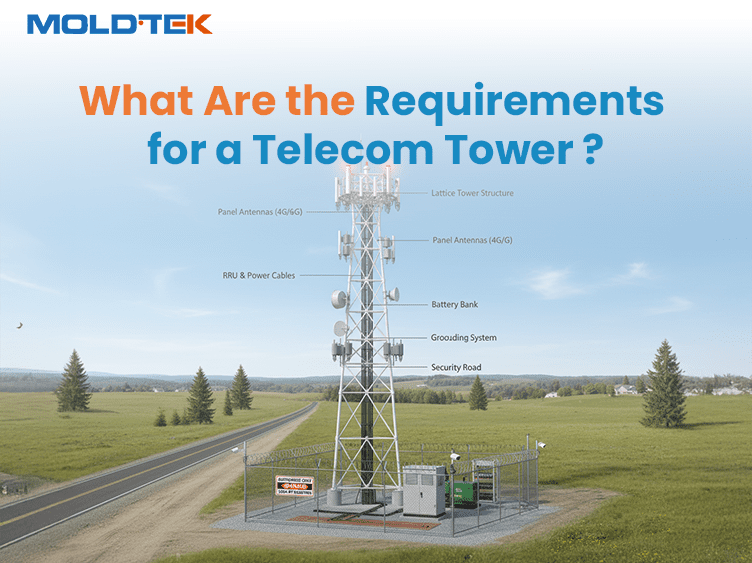
The requirements for a telecom tower extend far beyond structural construction. Tower owners must comply with a multi-layered regulatory, engineering, and safety framework that governs tower siting, where a cell tower can be built, how it must be designed, and how it operates throughout its lifecycle. These requirements ensure public safety, structural integrity, regulatory compliance, and long-term reliability of wireless communications infrastructure.
From a telecom tower engineering perspective, telecom tower requirements can be grouped into regulatory approvals, zoning and permitting, site conditions, structural and technical standards, and documentation and inspection processes governing communications towers.
Regulatory Requirements for Telecom Towers
Federal Aviation and Communication Compliance
Telecom towers are subject to federal regulations to protect airspace safety and communication integrity for wireless communications and public infrastructure.
Aviation safety approvals are required when towers exceed specified height thresholds or are located near airports and flight paths. These approvals ensure that tower height, lighting, and marking do not pose risks to aircraft.
Radio frequency (RF) compliance is mandatory to ensure emissions remain within prescribed safety limits for workers and the public.
Environmental and cultural assessments may be required to evaluate environmental impact and potential effects on surrounding areas before tower construction approval is granted.
These regulations establish the baseline safety and operational framework for telecom infrastructure.
Zoning, Land Use, and Local Permitting Requirements
Zoning and Site Eligibility
Local authorities regulate where telecom towers can be installed based on land-use classifications and local zoning regulations applicable to communications towers.
- Towers are typically permitted in industrial or commercial zones
- Residential areas often have strict limitations or additional conditions under local zoning and permitting frameworks.
- Site selection must account for proximity to roads, utilities, and neighboring properties
Setback and Fall Zone Requirements
A key safety requirement is the fall zone, which ensures adequate clearance if a structure fails.
- Tower bases are often required to be set back from property lines
- Setback distances are typically proportional to tower height
- Roads, buildings, and public areas must remain outside designated fall zones
These measures reduce risk to the surrounding infrastructure and the public.
Design, Aesthetic, and Security Requirements
Design and Visual Impact Controls
Local authorities may require telecom towers to minimize visual impact.
- Use of stealth or camouflaged designs
- Specific color, finish, or surface texture requirements
- Height restrictions based on surrounding development
These design controls are particularly common in urban, residential, or environmentally sensitive locations.
Security and Access Control
Telecom towers must incorporate physical security measures to prevent unauthorized access.
- Perimeter fencing around the site
- Anti-climb features on tower structures
- Controlled access points for maintenance personnel
Security provisions are essential to protect both equipment and public safety.
Structural and Engineering Requirements
Structural Design Standards
Telecom towers must be engineered to withstand environmental and operational loads.
- Compliance with recognized tower design standards (such as TIA-based guidelines)
- Resistance to wind, weather, and site-specific loading conditions
- Use of durable, non-flammable, and corrosion-resistant materials
Structural design ensures the tower remains stable and functional throughout its design life.
Meeting these structural and safety requirements depends on accurate analysis and code compliance, which are core components of professional telecom tower structure design for telecom infrastructure projects.
Capacity and Future Expansion
Modern telecom towers are typically designed to support:
- Multiple service providers
- Additional antennas and equipment
- Future upgrades without structural modification
This requirement improves efficiency and reduces the need for additional towers.
Documentation and Approval Process
Engineering and Application Submissions
Before construction, telecom tower projects require comprehensive documentation, including:
- Site layout and location plans
- Structural and foundation drawings
- Engineering calculations and analyses
- Property owner permissions and agreements
These documents allow authorities to assess compliance with safety, zoning, and engineering standards.
Construction Oversight and Inspections
Authorities may require inspections at various stages of construction.
- Verification of foundation and structural installation
- Independent testing or third-party inspections
- Final approval before commissioning and operation
Ongoing inspections may also be required as part of routine maintenance programs.
Maintenance and Operational Requirements
Once operational, telecom towers must be regularly maintained to ensure continued compliance.
- Periodic structural inspections
- Equipment performance checks
- Monitoring for corrosion, fatigue, or damage
Routine maintenance is essential to ensure safety, reliability, and uninterrupted service delivery.
Conclusion: Telecom Tower Requirements Are Multi-Disciplinary
Telecom tower requirements involve a coordinated approach combining regulatory approvals, zoning compliance, telecom engineering design, safety measures, and ongoing maintenance. Each requirement plays a role in ensuring towers are structurally sound, environmentally responsible, and safe for public use. Successful telecom tower projects depend on early planning, accurate engineering analysis, and adherence to applicable standards throughout the project lifecycle.
To navigate regulatory approvals, zoning compliance, and structural requirements effectively, Moldtek supports tower owners through specialized telecom tower engineering design services covering analysis, documentation, and standards-driven design.
Telecom towers are primarily built using steel towers, reinforced concrete, aluminum, and emerging composite materials, selected based on structural loads, weather conditions, and performance requirements. Steel is the most widely used material due to its strength, durability, and ability to withstand high winds, while reinforced concrete is commonly used for foundations and monopole structures. Material selection is guided by engineering analysis and industry standards to ensure telecom towers reliably support antennas, base stations, and telecommunications networks over their full service life.

About the Author
By Abhishek Suresh
Deputy Manager – Marketing at Moldtek Technologies
A distinction holder in MSc International Management from Trinity College Dublin and a semi-qualified Chartered Accountant (CA – IPCC from India) with an undergraduate degree in the field of accountancy and finance. I am currently working at Moldtek Technologies Ltd as a Deputy Manager, Marketing, taking care of the entire marketing activities of the business.