
In construction and steel detailing, technical abbreviations are widely used to simplify communication between engineers, architects, detailers, and construction teams. These terms help ensure accuracy in drawings, structural coordination, and project execution.
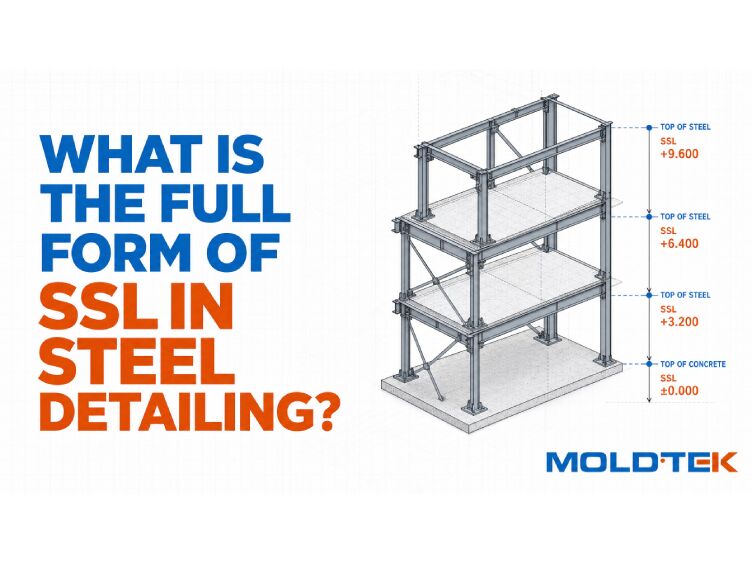
One such commonly used term is SSL, which stands for Structural Surface Level.
SSL is an important reference point used in structural and construction drawings to indicate the exact level or elevation of a structural surface within a building or infrastructure project. Understanding SSL is essential for maintaining dimensional accuracy and ensuring proper alignment between structural components during fabrication and construction.
What Does SSL Mean in Steel Detailing?
SSL stands for Structural Surface Level.
It refers to the elevation or level of a structural surface, typically measured relative to a project’s benchmark or datum level. SSL helps define the exact vertical positioning of structural elements such as:
- Steel beams
- Columns
- Floor slabs
- Platforms
- Structural decks
In steel detailing and construction drawings, SSL is used to maintain consistency between design plans, fabrication drawings, and site execution.
Why SSL Is Important in Steel Detailing
Understanding the fundamentals of structural steel detailing processes also helps explain how level references, such as SSL, improve accuracy during construction.
SSL plays an important role in:
- Maintaining structural accuracy
- Aligning steel members correctly
- Supporting fabrication precision
- Coordinating multiple building systems
- Preventing installation errors
By clearly identifying structural surface elevations, SSL helps ensure that fabricated steel components fit correctly during erection.
Difference Between SSL, SFL, and FFL
Several level references are used in construction drawings, and they often serve different purposes.
| Abbreviation | Full Form | Purpose |
| SSL | Structural Surface Level | Indicates the level of a structural surface |
| SFL | Structural Floor Level | Refers to the elevation of the structural floor |
| FFL | Finished Floor Level | Indicates the final finished floor height after flooring materials are applied |
These levels help construction teams coordinate structural, architectural, and finishing activities accurately.
For example:
- SSL focuses on the structural element itself
- FFL considers flooring finishes such as tiles or concrete toppings
- SFL refers specifically to structural floor elevations
Understanding these differences helps avoid dimensional inconsistencies during construction.
How SSL Is Used in Steel Detailing Drawings
Accurate level references are an important part of structural steel detailing, helping ensure proper alignment and coordination during fabrication and erection.
- Shop drawings
- Erection drawings
- Structural layouts
- Section drawings
- Beam and column details
These references help fabricators and site teams understand where structural components must be positioned vertically.
For example, beam elevations may be referenced relative to the SSL to ensure proper alignment with floor systems and adjoining structural members.
SSL in Structural Coordination
Construction projects involve coordination between several disciplines, including:
- Structural engineering
- Architecture
- Mechanical systems
- Electrical systems
- Plumbing layouts
SSL references help ensure that structural steel components align correctly with these systems.
Accurate level coordination reduces the risk of:
- Structural clashes
- Misaligned installations
- Rework on-site
- Construction delays
This is especially important in projects involving complex steel structures and multi-level building systems.
Importance of Accurate Level Referencing
Incorrect level references can create major issues during fabrication and erection.
If SSL values are inaccurate, it may result in:
- Beam misalignment
- Uneven floor systems
- Improper connection positioning
- Installation difficulties
- Delays in project execution
Accurate structural level references therefore contribute directly to construction quality and structural integrity.
SSL and BIM Coordination
Modern steel detailing workflows often use Building Information Modeling (BIM) tools to coordinate structural levels digitally.
BIM-based detailing software helps teams:
- Visualize structural elevations
- Detect clashes early
- Verify level consistency
- Improve coordination accuracy
Digital modeling improves communication between engineers, detailers, and site teams while reducing manual interpretation errors.
Where SSL Is Commonly Used
SSL references are widely used in:
- Commercial buildings
- Industrial plants
- Warehouses
- Multi-story structures
- Infrastructure projects
- Steel fabrication projects
Any project involving structural steel or floor level coordination may use SSL references in drawings and documentation.
Summary: What Is the Full Form of SSL in Steel Detailing?
SSL stands for Structural Surface Level. It is a level reference used in construction and steel detailing drawings to indicate the elevation of structural surfaces such as beams, slabs, and steel members. SSL helps improve structural accuracy, coordination, fabrication precision, and alignment during construction projects.
Conclusion
SSL is an important term in steel detailing and construction documentation because it helps define accurate structural elevations throughout a project. By maintaining consistency between design, fabrication, and site installation, SSL supports efficient project coordination and reduces construction errors. Understanding level references such as SSL, SFL, and FFL is essential for ensuring structural precision and smooth project execution.

About the Author
By Abhishek Suresh
Deputy Manager – Marketing at Moldtek Technologies
A distinction holder in MSc International Management from Trinity College Dublin and a semi-qualified Chartered Accountant (CA – IPCC from India) with an undergraduate degree in the field of accountancy and finance. I am currently working at Moldtek Technologies Ltd as a Deputy Manager, Marketing, taking care of the entire marketing activities of the business.