
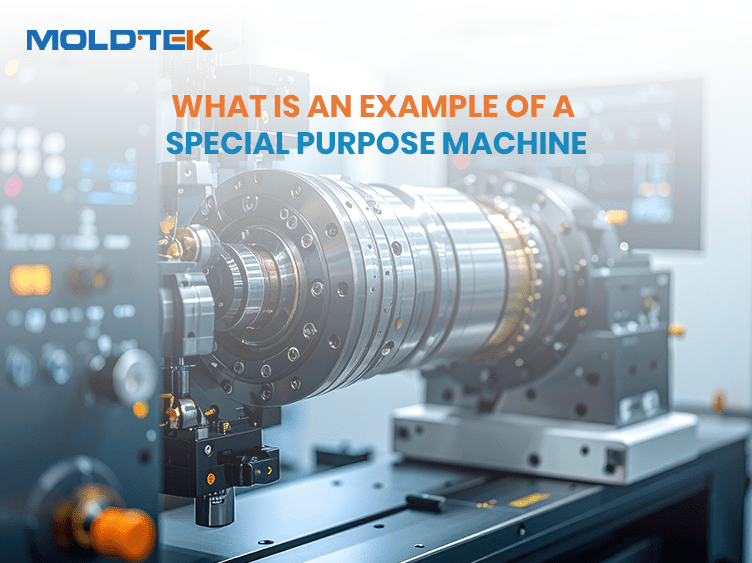
Special Purpose Machines (SPMs) are customized machines developed to perform a specific task with high accuracy, speed, and repeatability. Unlike general-purpose machines, SPMs are designed for focused operations such as CNC cutting, robotic welding, automated material handling, or precision assembly.
They are widely used across construction, manufacturing, mechanical, and telecom industries to improve productivity, reduce manual intervention, and maintain consistent output quality.
Redefining SPMs in the Age of Smart Engineering
While a CNC lathe or robotic welder is a textbook example of an SPM, the real ROI lies in how AEC and manufacturing firms integrate these systems into broader digital engineering workflows.
In modern engineering environments, the effectiveness of Special Purpose Machines depends heavily on how well they are integrated into broader production and digital workflows. Industries increasingly align SPM usage with automation systems, digital models, and process simulations to maximize return on investment.
To understand how these concepts are implemented at the professional engineering level, you can learn more about special-purpose machine design services.
From steel detailing for automated welding systems to BIM-integrated precast workflows using robotic mold cleaning systems, This integration allows teams to identify bottlenecks early, improve coordination between design and production, and reduce downstream rework.
What is a Special Purpose Machine (SPM) and Why Does it Matter?
Definition:
A Special Purpose Machine is a custom-built, highly specialized machine tailored for a particular type of task and optimized to operate with maximum efficiency and minimal intervention. It’s typically used in mass production setups that require precise, repetitive tasks.
Typical Functions Include:
- Precision Cutting and Milling (e.g., CNC)
- Automated Welding (robotic or hydraulic)
- Telecom component assembly
- Packaging and electronic PCB soldering
- Structural bolt tightening for steel connections
What is an Example of a Special Purpose Machine?
Let’s explore some industry-specific examples relevant to the sectors Moldtek serves:
| Industry | SPM Example | Function |
| Structural Steel | CNC plasma cutting system | Cuts beams/plates for welding per shop drawings |
| Precast | Automated concrete feeder | Uniform concrete filling in casting beds |
| PEB Design | Rotary bolt-tightening robot | Ensures uniform torque at structural joints |
| Telecom Towers | Robotic tower segment welding station | Welds segments of towers with precision |
| Manufacturing | Servo-motor broaching machine | Pulls broach tools with precise linear motion |
Engineering teams often align these machines with digital tools such as BIM platforms, simulations, and 3D models to ensure seamless coordination between production systems and on-site execution.
Common Application Areas of Special Purpose Machines
Special Purpose Machines are commonly applied across multiple engineering and manufacturing domains where repetitive, precision-driven tasks are involved. Their usage often aligns with digital modeling, automation planning, and production sequencing.
Common application areas include structural fabrication, precast manufacturing, telecom assembly, and automated production lines.
What Makes Moldtek a Leader in Structural Steel Detailing?
Trusted Globally
- Active across USA (Texas, Georgia, California), Gulf region, and Indian hubs like Hyderabad, Pune, Chennai
- Over 2000+ projects executed globally
- Publicly listed with strong financial and industry backing
Software Mastery
- Expertise across Tekla, Revit, SDS/2, AutoCAD, SolidWorks
- Fully integrated BIM to fabrication-ready workflows
- Real-world simulation and clash detection using Navisworks
End-to-End Detailing
- Steel connection design, bolt schedules, ND bolt specs
- Fabrication drawings, erection sequencing, welding maps
- Shop delivery for PEB, precast, telecom, and MEP frameworks
Talk to Our Engineering Team Now to discuss your next SPM-integrated project
SPM Integration in Key Service Domains
1. Structural Steel + BIM Detailing with SPM Focus
Workflow:
- Import architectural + structural PDFs
- Model in Tekla with SPM-friendly tolerances
- Apply steel connection types compatible with robotic welders
- Generate fabrication files (*.NC1) to use with cutting machines
2. Precast Panel Detailing Enabled by Automation
Multiple SPMs used:
- Concrete casting streamlines via auto feeders
- Robotic mold release shakers
- Panel flipping cranes on alarms
Moldtek delivers :
- Panel sequences and molds planning
- Loads + connection details
- BIM-based crane reach analysis
3. Telecom Engineering: SPMs in Assembly & Welding
Especially relevant for 5G tower rollout across India and GCC
Common SPMs used:
- Tube flaring and chamfering machines
- Robotic assembly welders
- CNC slot cutters for flanges
Moldtek enables SPM-triggered workflows by providing:
- CAD models for telecom parts
- Pre-engineered tower structures
- Assembly drawings for manufacturing facilities
Common Types of Special Purpose Machines in Our Projects
- CNC Plasma Cutters
- Hydraulic Press Brake Machines
- Weld Automation Robots
- Pipe Chamfering Equipment
- Tube Correction and End Forming Machines
- Rotary Indexing Drilling Systems
- Servo-Controlled Broaching Machines
- Labelers and Pick-and-Place for tower gear
Want to Learn More About Special Purpose Machines?
Special Purpose Machines play a critical role in modern automation by enabling precise, repeatable operations across manufacturing and construction environments. Understanding their applications, limitations, and integration challenges helps engineering teams make informed decisions about automation strategies.
If you’re exploring professional special purpose machine design services for industrial or construction applications, you can learn more about the engineering capabilities offered by Moldtek Engineering here.
In professional mechanical engineering practice, SPM design refers to Special Purpose Machine design services that involve engineering customized machines to automate specific manufacturing operations. These designs are typically executed as part of industrial automation projects, where precision, repeatability, cycle-time optimization, and integration with production systems are critical.
Special purpose machine design is a specialized engineering service focused on developing custom-built machines that automate dedicated manufacturing or industrial tasks. Unlike standard machines, these designs are tailored to specific production requirements such as cycle time, load conditions, safety, and integration with automation and control systems, ensuring long-term efficiency and operational reliability.
Special Purpose Machines (SPMs) are custom-built machines designed for high-efficiency tasks such as CNC cutting, telecom tower fabrication, precast welding, or robotic assembly. These machines enhance throughput, minimize errors, and accelerate operations across manufacturing, construction, and telecom sectors.

About the Author
By Vamsi Posemsetty
EVP – Global Strategy & Operations, Moldtek Technologies
Founder & CEO, Zenitude Technologies
Vamsi Posemsetty brings 20+ years of global experience in manufacturing, engineering services, and enterprise technology transformation. At Moldtek, he leads strategy and delivery across structural steel detailing, BIM modeling, and industrial projects.
He has held leadership roles at Microsoft, Tata Motors, Mahindra & Mahindra, and GE across the US, Europe, and Asia. Now at Zenitude Technologies, he focuses on AI-powered platforms for industrial upskilling.
A thought leader in real-world AI adoption in engineering, Vamsi was part of ISB Hyderabad’s founding cohort (Business Analytics, 2013) and is the upcoming author of “AIM: Unlocking the AI Mindset.”